PAP-Bio 2: Addressing gender and social cohesion on the outskirts of the Comoé National Park
The « Landscape » approach
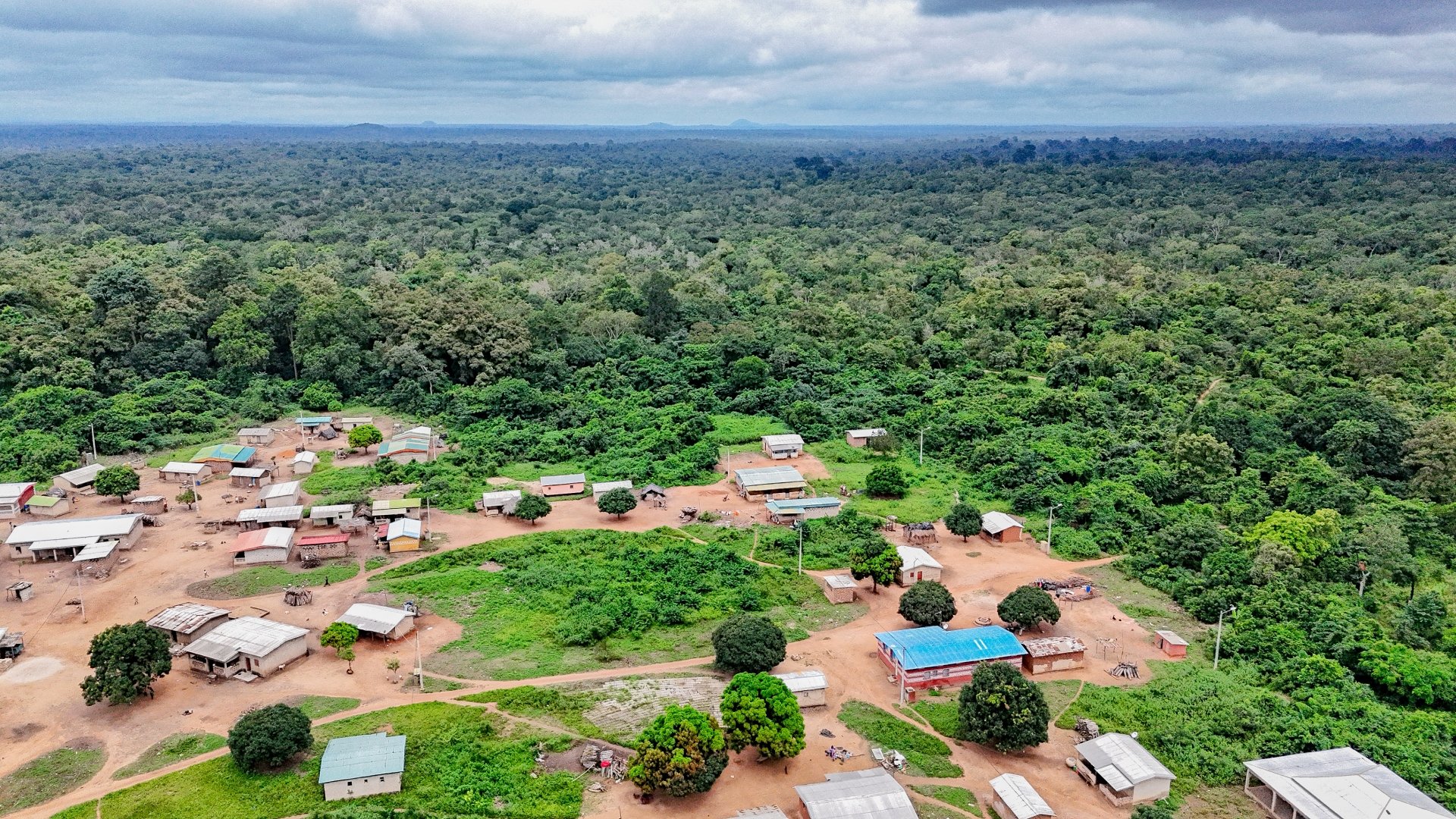
Nitidæ has been supporting civil society organisations and local communities on the western outskirts of the Comoé National Park since 2020 (PAP-Bio and PAP-Bio 2). Managed from the Dabakala office, its activities cover 29 villages located in the Hambol and Tchologo regions.
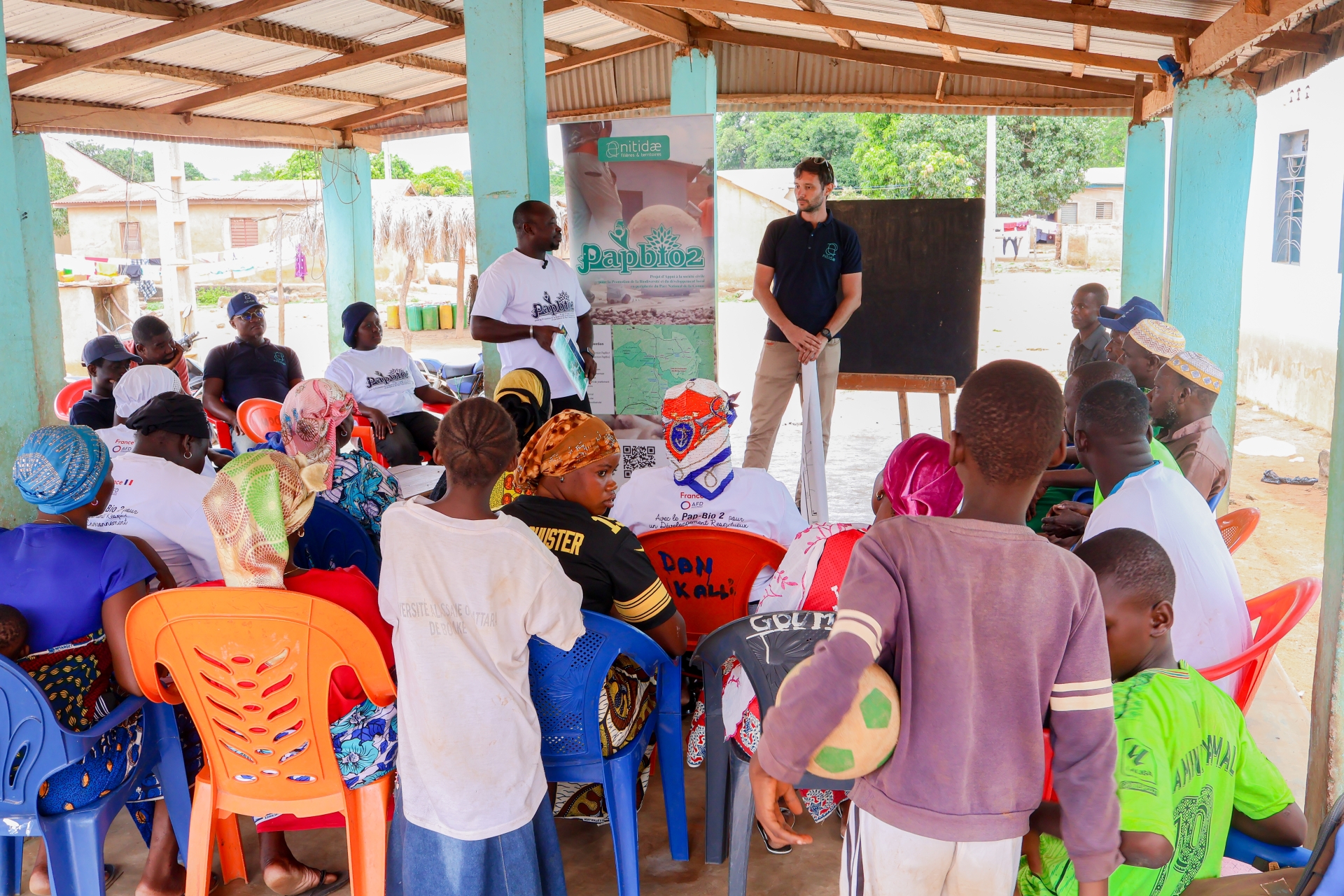
Land governance, reducing conflicts between farmers and herders, environmental measures and income-generating activities: the project combines the conservation of natural areas with local development. Within this framework, two themes are the subject of in-depth monitoring: gender and social cohesion.
Gender: essential but under-recognised work carried out by women
Economic, domestic and community activities highlight marked inequalities between men and women. Patrilineal systems concentrate decision-making on land and community management.
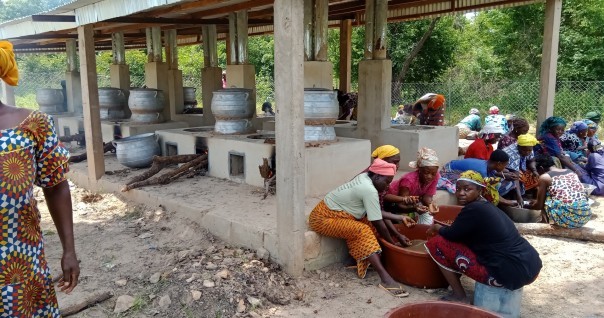
Women, however, are responsible for the bulk of household duties in addition to farm work. Whilst they enjoy a degree of autonomy in certain activities (peanuts, shea nuts, medicinal bark, mutual aid groups, etc.), their economic independence remains very limited.
The report also emphasises one point: ‘women’ do not form a homogeneous group. Age, ethnic origin and family status all have an equal impact on access to decision-making.
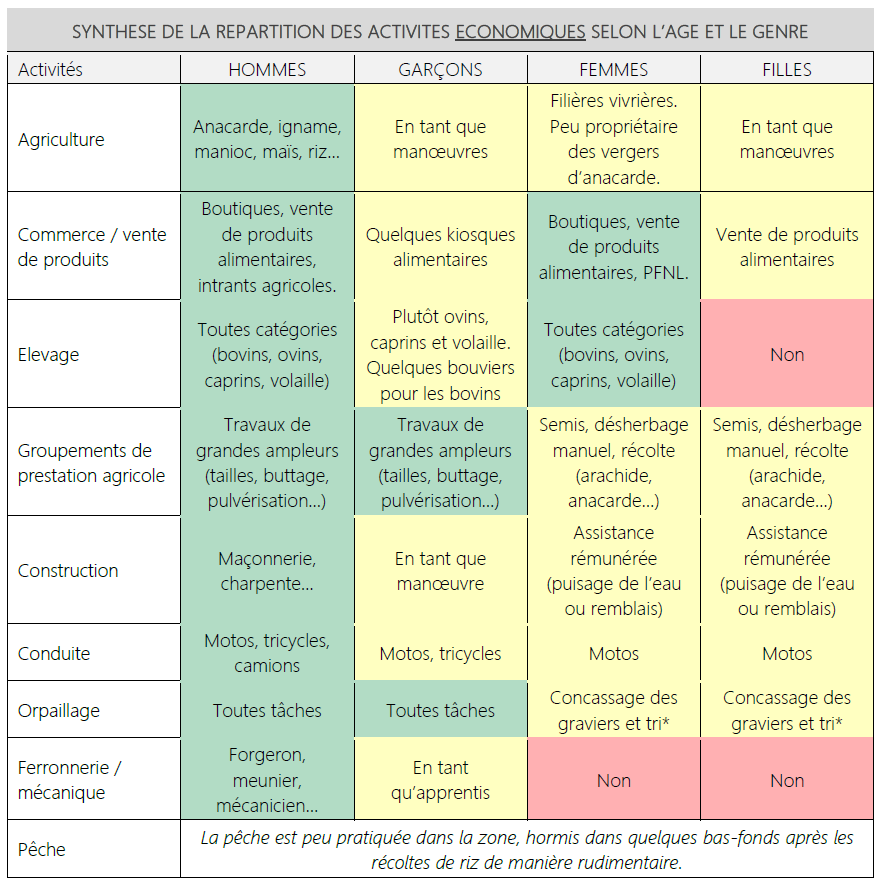
Green indicates activities where there is total control over the activity. Yellow indicates partial involvement, either in terms of tasks or decision-making processes. Red indicates that the practice is prohibited. Please note: this does not take into account the arduous nature of the tasks or discriminatory factors
Social cohesion: a buffer zone under pressure
The intervention area is located close to a regional environment that is deteriorating. The security crisis in Mali and Burkina Faso is leading to population displacements, including many herders, towards northern Côte d’Ivoire.
An analysis of conflicts across the 29 villages highlights three trends:
- Crop damage caused by livestock, reported in almost all villages and on the rise in several of them. This fuels a cycle of mistrust, and even reprisals, towards Fulani herders
- Land disputes, linked to the demarcation of village territories or the boundaries of protected areas (National Park, Tingui Mountains Biodiversity Zone)
- Rivalries between neighbouring villages, which complicate the management of shared infrastructure such as schools or health centres
Taking a long-term approach
Gender and social cohesion are linked to deeply ingrained practices. Nitidæ advocates a realistic approach: working through agricultural value chains and local development to create spaces for dialogue, without upsetting existing balances. Progress is often modest and fragile, but it is sustainable over the long term. Look out for a second report at the end of the project, dedicated to assessing their impact.
The full report ‘Gender & Social Cohesion – Part 1: Assessment and Action Plan’ is available to download at the bottom of the page (Related documents)
Related projects