Thesis defense on land use change, forest regrowth, and future pathways in the Miombo landscape in Mozambique
The presentation and research work of Sá Nogueira Lisboa received unanimous recognition from the jury for their outstanding quality, originality, and exceptional capacity to coherently integrate diverse themes and methodological frameworks within a single analytical framework. Sá Nogueira’s research focuses on « From disturbance to recovery: assessing land use change, regrowth, and future pathways in the Miombo landscape in Mozambique ».
This research investigates the socio-ecological dynamics of Miombo woodlands, focusing on the drivers of deforestation and forest degradation, the recovery of forests following different disturbance types, and future land-use pathways under alternative development and conservation scenarios.
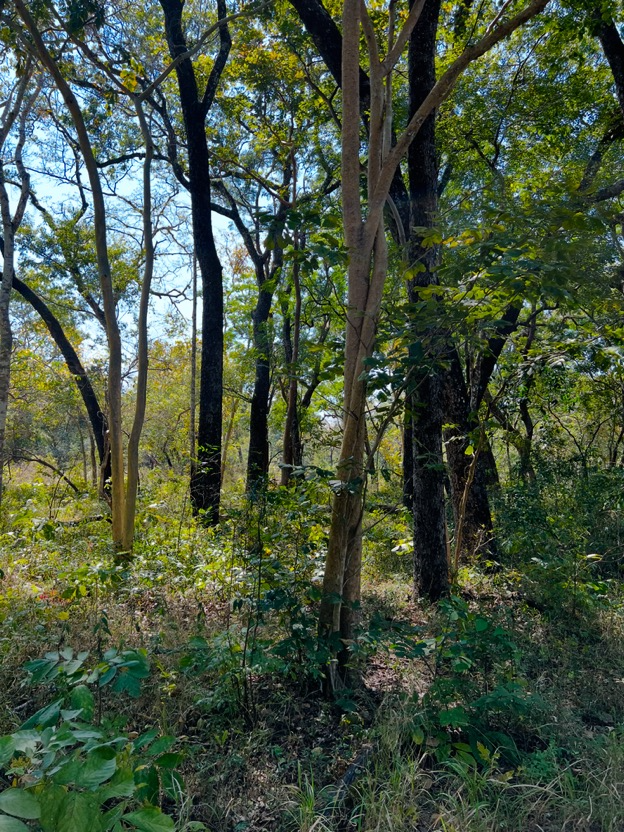
Mozambican Miombo forest
Methodology
The study adopted an integrated, multi-scale approach combining:
- Remote sensing and spatial analysis to map land use and land cover change and identify key drivers of deforestation and degradation
- Field-based ecological surveys to assess woodland structure, species composition, biomass, and diversity along post-disturbance recovery gradients following agriculture, charcoal production, and logging
- Statistical and multivariate analyses to evaluate ecological recovery trajectories and the influence of biophysical and socio-economic factors
- Scenario-based modelling to explore future land-use pathways and assess trade-offs between ecological integrity and socio-economic outcomes
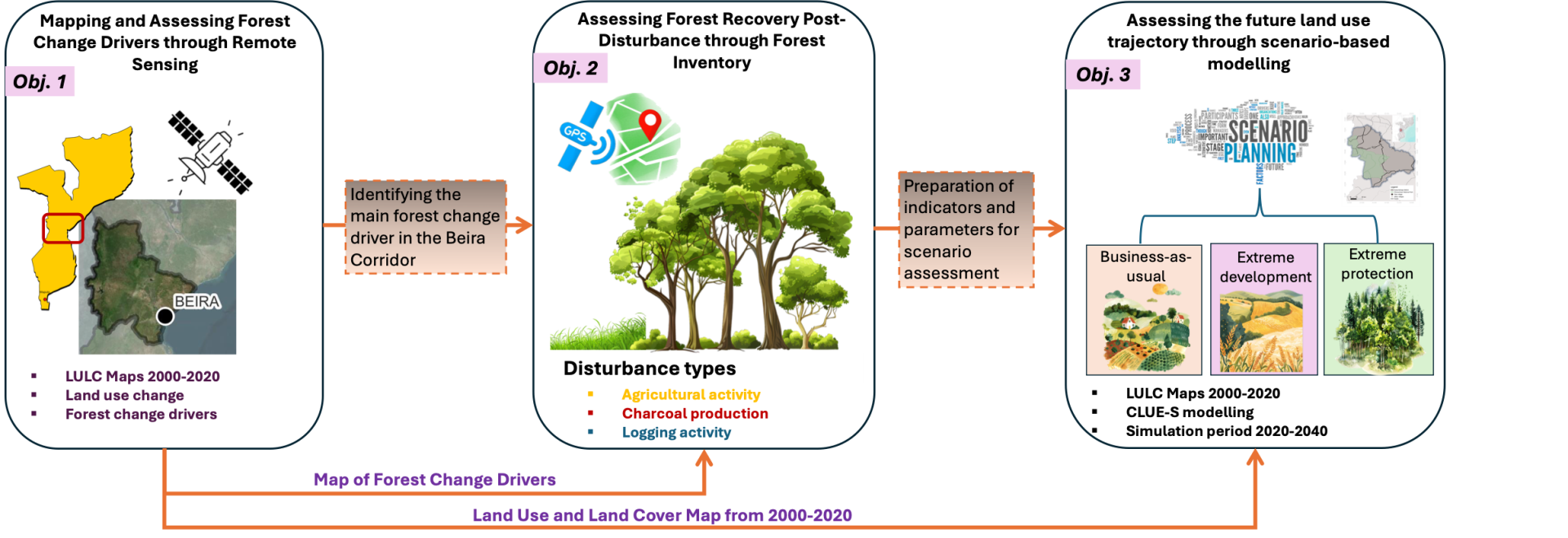
Illustration of the overall approach and methodology used in the PhD
Key results
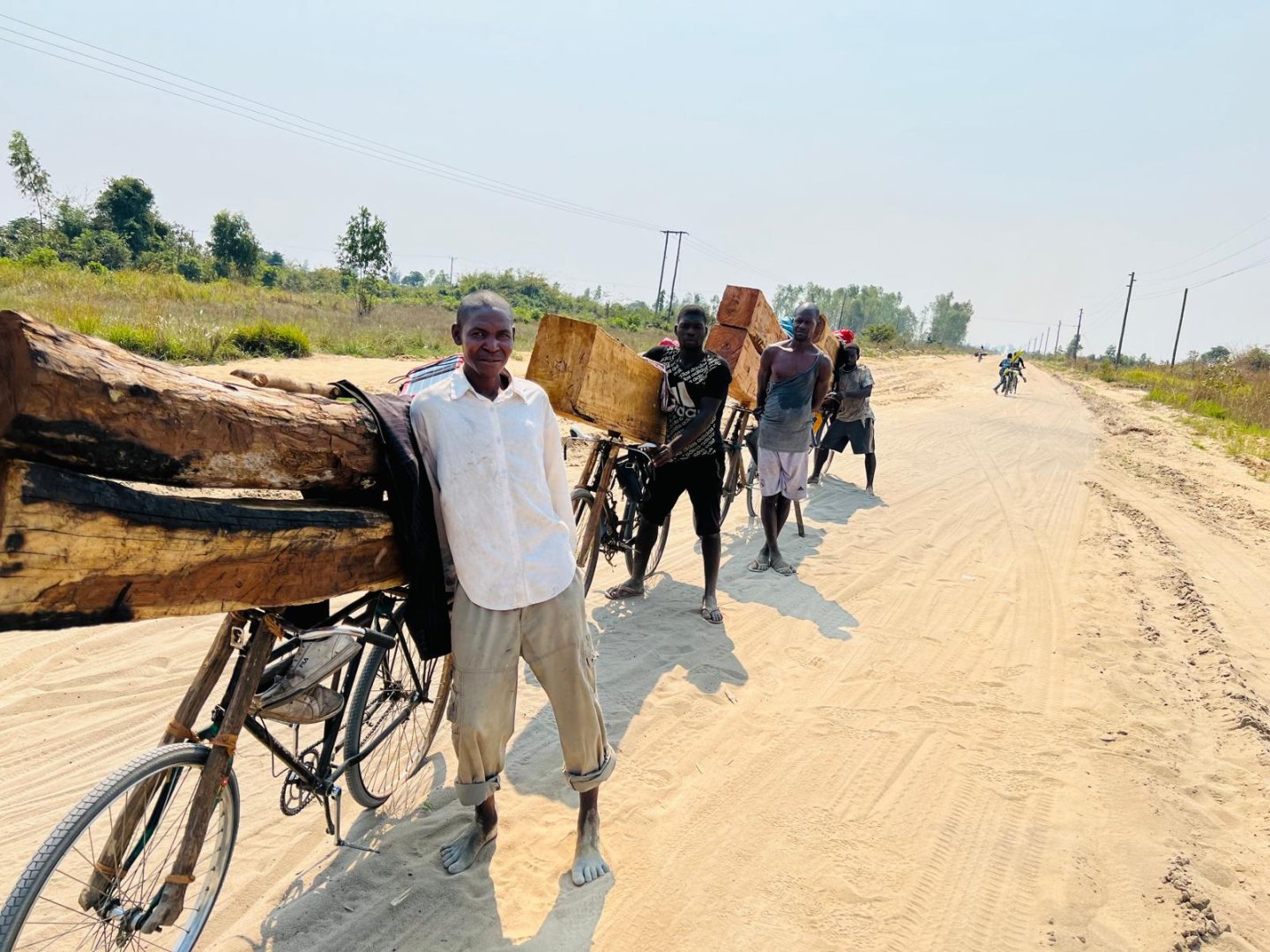
- Deforestation and forest degradation in the Miombo landscape are primarily driven by the expansion of smallholder agriculture, charcoal production, selective logging, and fire, often acting in combination rather than in isolation
- Miombo woodlands demonstrate clear but disturbance-specific recovery trajectories, with structural attributes recovering faster than species composition and diversity
- Charcoal production and shifting cultivation leave long-lasting ecological legacies that influence biomass accumulation, species dominance, and recovery rates
- Future land-use scenarios reveal significant trade-offs between economic development and forest conservation, highlighting pathways where strategic planning can reduce forest loss while supporting livelihoods
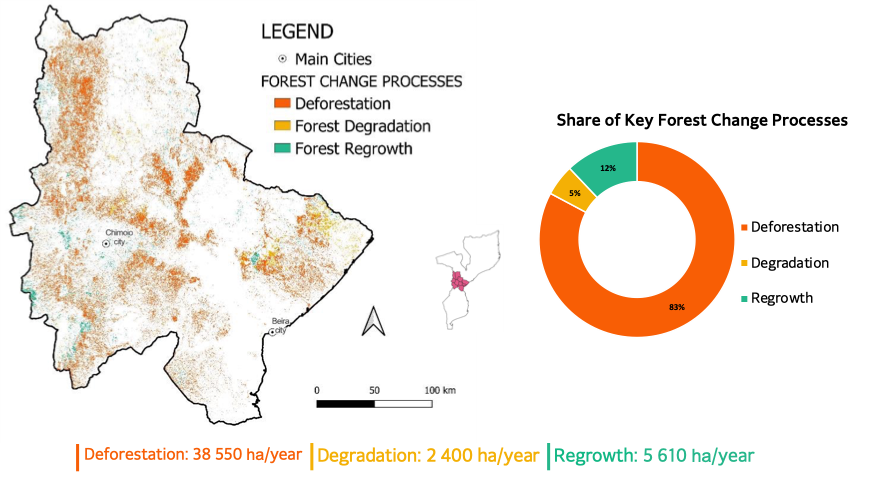
Mapping of the forest cover dynamics components (deforestation, degradation, et regrowth) within the Beira corridor in Mozambique
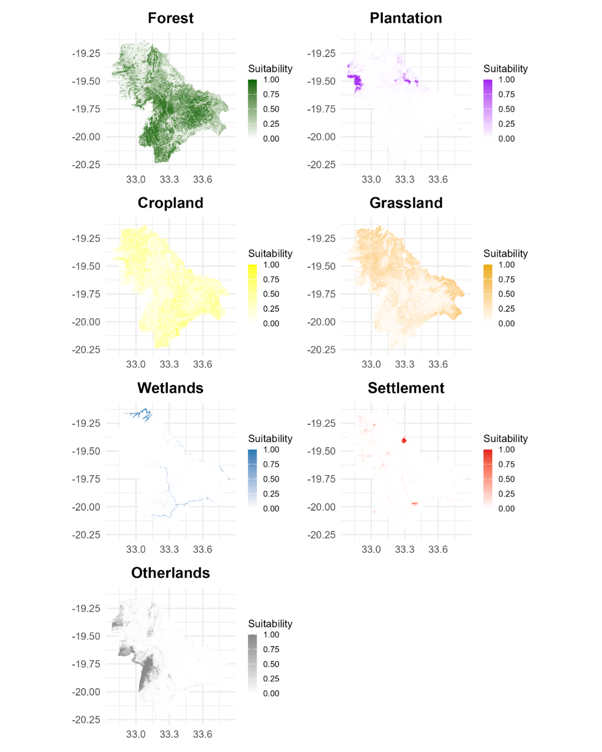
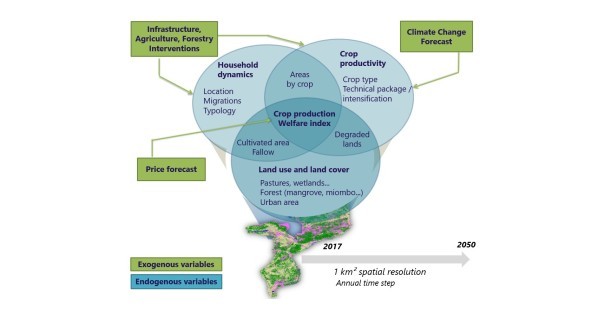
Land use components fed into the model used for producing foresight scenarios
This work provides evidence-based information to inform sustainable land-use planning, forest management, and climate-related decision-making in Mozambique and across the Miombo ecoregion.
This thesis was conducted as part of the LUCCIA project funded by the AFD. The French Embassy in Mozambique has also contributed to the funding.
Related projects