
BEY DIIWAAN YI - Support for scaling up agroecological initiatives to tackle the vulnerability of food systems in Senegal
Partners
Main goals
Enhance the sustainability of local food systems by leveraging and scaling innovative territorial approaches to agroecology
In this context, sustainability refers to fostering food systems that demonstrate resilience to the complex socio-environmental challenges, promote social justice, protect ecosystems, and ensure food security and sovereignty. This goal aligns with LED’s strategy promoting sustainable food systems.
Specific objectives
SO1. Strengthen inclusive governance structures to facilitate the integration of agroecology and the just, sustainable use of natural resources into local policies and practices
SO2. Improve the sustainability and productivity of local production systems as farmers and community members collaboratively implement and refine co-developed agroecological infrastructure and agronomic practices
SO3. Strengthen collaboration between food system actors to open new market opportunities for producers and processors, increasing the diversity and quantity of local agroecological products available on the market
Results
Inclusive governance of food systems
R1. A territorial diagnostic of food systems is co-produced for each living lab
R2. A shared vision and collective action plans to support the agroecological transition are co-elaborated and ready for implementation at departmental scale
R3. Local and/or traditional citizen organisations are sensitised and trained in inclusive management of resources and agroecological intensification
Agroecological Intensification
R4. Common interest developments are tested with identified communities such as living vegetative hedges or sylvopastoral pasture restoration measures
R5. An integrated Farmer Field School (FFS) mechanism is set up where farmers are at the centre of knowledge co-construction
R6. Learnings from R5. experiments are disseminated through rigorous documentation, communication adapted to various audiences, and innovative multimedia tools
R7. A workshop on integrating agroecological knowledge into educational curricula is held bringing together professionals from diverse backgrounds
Development of markets and alternative value chains
R8. Support for RACINES and DyTAEL network activities strengthens links between producers, traders, and consumers through the organisation of regular local organic markets, digital platforms and social events
R9. A collective reflection is conducted on labelling, quality control, and technical device needs, such as market information systems
R10. A mapping of agroecology actors is created in Bignona and Petite Côte in collaboration with their DyTAEL
R11. Co-identify market opportunities for Non-Timber Forest Products (NTFPs) and support their development, focusing on products like “maad” and cashew apples
Activities
Research and diagnostics
A1. Conduct territorial and value chain diagnostics through field research and multistakeholder events
A2. Map food system actors and create an interactive actors map
A3. Provide data to facilitate multi-actor deliberations
A4. Conduct targeted research on natural resource management and the role of commons
Engaging and connecting stakeholders
A5. Facilitate multi-stakeholder workshops to foster knowledge sharing and build consensus on a shared future vision
A6. Support Village Development Committees and activate their involvement in creating agroecological development plans
A7. Enable scenario co-construction and governance transformation pathways
A8. Collaborate with actors to support alternative value chains and territorial markets by strengthening connections within the food system and improving natural resource management
A9. Establish a Racines Committee in Bignona to coordinate efforts and drive community-led initiatives
Experimentation and technical support
A10. Develop and test agroecological practices through Farmer Field Schools
A11. Support village land-use planning and make community investments in sustainable infrastructure
A12. Explore high-value transformation options (Non-Timber Forest Product -NTFP, cashew apple meat)
A13. Implement agroecological support services tailored to local needs, co-constructing models with community members
A14. Integrate agroecology into Bignona Technical College training programs
Communication and advocacy
A15. Develop multimedia awareness-raising materials (photo, video, and forum theatre) in collaboration with ARTS and AgroVoices
A16. Conduct targeted advocacy efforts with local authorities
A17. Organize youth-focused communication campaigns
A18. Facilitate marketing and advocacy for agroecological products, working with local networks to connect producers with markets and develop sustainable market practices
A19. Capitalize on project outcomes through documentation and knowledge-sharing for scaling
Related people
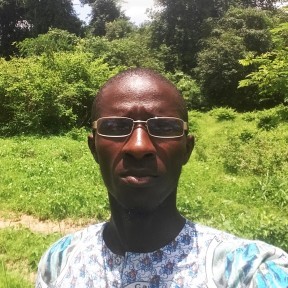
Siméon Diedhiou
Holder of a PhD in Agriculture and Climate Change at the University of Sciences, Techniques and Technologies of Bamako (USTTB), he is also graduated from the Cheikh Anta Diop University of Dakar with a Master 2 in Sustainable Management of Agroecosystems Horticulture and a Master 2 in Environmental Sciences. He has good experience working in rural Senegalese areas, particularly within the NGO Agrecol Afrique, as a program manager

Pierre Sutter
Graduate Engineer in Agriculture, Specialized in Agroecology of the Institut Supérieur d’Agriculture (ISA), he brings his expertise to the methodological support of the teams on the realization of diagnosis at the scale of the territory and the plot to develop the rules for managing natural resources and co-constructing innovative agricultural practices with producers. Based in Dakar serving West & Central Africa.
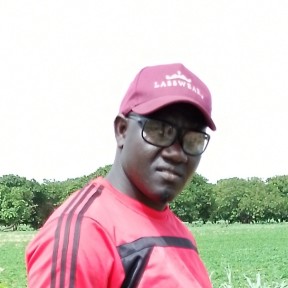
Mamadou Tine
He has a degree in project management from the Higher Institute of Management, a diploma in environmental management and sustainable development from ISFAR and a diploma in breeding from the departmental livestock and animal production service. Since 2016, he has specialized in good governance, breeding and marketing. He worked on sustainable horticulture and livestock development for the Lutheran Church of Senegal as well as for the Belgian NGO Solidagro on good governance and the marketing of market garden products
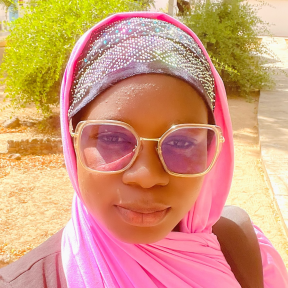
Arame Diouf
Student in the final year of her Master’s 2 degree in Territorial Development Engineering, she holds a University Diploma in Technology (DUT) in Agroecology and a Bachelor’s degree in Crop Production and Agronomy, both obtained at Gaston Berger University in Saint-Louis, Senegal. She also holds a Higher Diploma in Entrepreneurial Management (Bac+3) specialising in Agricultural Business Management. She initially worked with the DyTAEL (Dynamique pour une Transition Agroécologique Locale) network in Fatick as a facilitator, whilst also serving as president of the JAAES (Jeunesse Actions Agro Écologiques Sahéliennes), an organisation committed to promoting sustainable initiatives amongst young people and rural communities in Diofior, in the Fatick region. She joined the Nitidæ team in 2025.
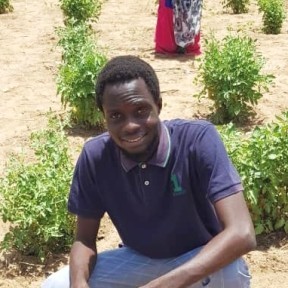
Mbaye Ndao
Graduated from Gaston Berger University in Saint-Louis (UGB) with a bachelor's degree in crop production and Agronomy and a higher diploma in entrepreneurial management (BAC+3) in the management of agricultural companies, animal production and crop production . He has experience at Carrefour International Canada, as a trainer in agroecology, advisor for the installation of market gardening perimeters and project evaluator. He was also a senior technician in vegetable production for the Cooperative Des Producteurs Maraîchers De Ngane/Kaolack (COOPMAN)