
KARIBALANZ - Assessment of carbon savings and co-benefits of the improved stove distribution programme
Main goals
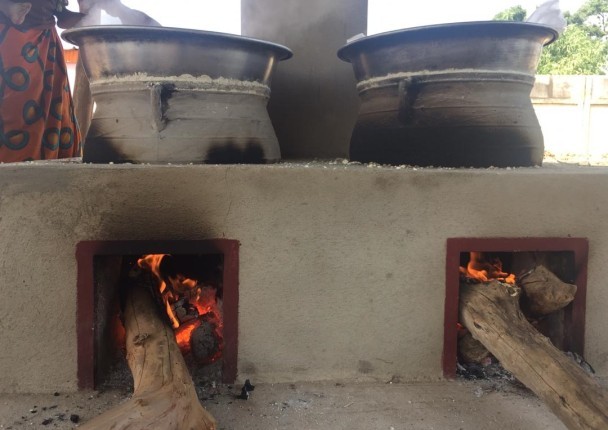
As part of a sustainability programme focused on carbon neutrality, private companies in Burkina Faso are relaunching a programme to distribute improved stoves to associated farmers organisations. The aim is now to ensure that 100% of women collectors are equipped with improved stoves by 2030, which means reaching a total of 37,000 units, whereas to date around 10,000 improved stoves have been distributed. Nitidæ has been commissioned to support these organisations in analysing the results of the previous programme, in particular by producing structured and up-to-date information, with the aim of better managing the current programme.
Specific objectives
SO1. Assess the environmental and social impacts resulting from the distribution of improved stoves in previous years
SO2. Update the Life Cycle Assessment (LCA) of shea butter
Activities
A1. Quantify and compare the carbon savings achieved by the three types of improved stoves distributed, compared with the traditional three-stone stove, in the context of blanching shea nuts
A2. Quantify the reduction in wood consumption and estimate the area of forest preserved as a result of this reduction
A3. Measure the pollution generated by the stove to establish the direct impact on health and the environment (reduction in exposure to smoke)
A4. Estimate the contribution to women’s empowerment and the effects on the local economy
A5. Update the Life Cycle Assessment (LCA) of shea butter, in particular by incorporating the new carbon performance figures determined in other activities, as well as the additional data sets made available by the companies
Related people
Magloire Sacla Aïde
Design & Mechanical Engineer, specialised in "Energy and industrial technician in mechanical production" from the Ecole Polytechnique of Abomey Calavi (EPAC) in Benin, he brings his expertise in renewable energy including biomass energy recovery and industrial process
See more
Romain Akpassonou
A design engineer in Energy and Process Engineering with a Master 2 in Numerical Modelling of Energy Systems from the National University of Science, Technology, Engineering and Mathematics (UNSTIM) in Benin, he specialises in the energy recovery of waste from agri-food processing. He develops solutions that are low-impact, reproducible and adapted to local realities. In 2025, he joined the Nitidæ team in Burkina-Faso to work on bio-energy issues.
See more
Fié Traoré
After graduating from studies in Geography, he specialised himself in Remote Sensing and Geographical Information System applied to Environment management and Sustainable Development. Fié is currently finishing his PhD in Environmental Sciences at the Joseph KI-ZERBO University. He brings his expertise in cartography and environmental analysis of landscapes (modelling, fragmentation, etc.) to the team in Burkina Faso within the framework of projects on landscape sustainable management. He is currently based in Ouagadougou as a GIS & Remote Sensing Task Officer.
See more
Julia Artigas Sancho
Process engineer and holder of a European MsC in Renewable energies, she works on energy-related issues in African industry, since 2016. Process optimization and agri-waste-to-energy systems are her main expertise areas: appropriate technologies, training on operation and maintenance, biofuels…
See more