DAFALGHAN - Study on the profitability and market Integration of dynamic agroforestry in Ghana
Partners
Main goals
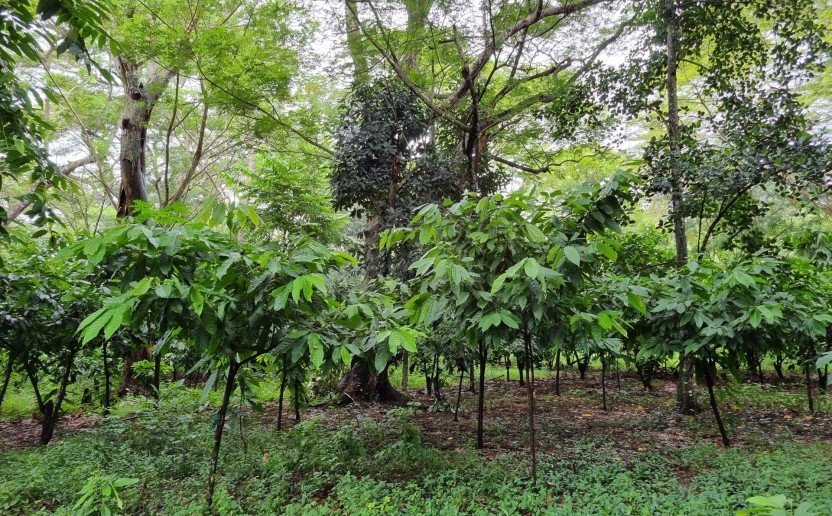
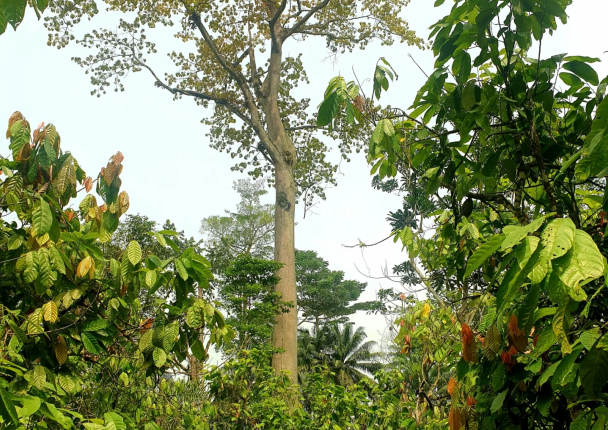
The Ghana Agroforestry for Impact (GAIM) project runs for three years (2023-2026) and aims to support 3 cocoa cooperatives in their agroecological transition, with more specifically an aim to convert 100 ha of cocoa into dynamic agroforestry systems (DAF)
The economic viability of DAF systems remains a major challenge, and Fairtrade Africa and Max Havelaar France are seeking external expertise to consolidate strategic orientations on this issue and support cooperatives and their members
Specific objectives
SO1. Understand how DAF systems operate in Ghana by assessing production, marketing and market aspects
SO2. Assess the economic viability of the systems, whilst also exploring other funding options such as Payments for Environmental Services (PES)
Activities
A1. Study the performance of the DAF systems (harvest potential) and commercialization practices of the farmers thanks to the analysis of the project data, discussion with the project staff, cooperative staff and interviews with farmers
A2. Analysis of market potential for the diversification crops thanks to a study of the local outlets, prices evolutions and potential presence of offtakers
A3. Design preliminary Business Plans for the cooperatives fuelled by the data of the project and the data collected on the field from the local market analysis : farmers’ profits ; coop revenues, expenses, and investments
A4. Study the feasibility of a PES scheme for DAF systems
Related people
Léo Godard
Agronomist with a degree from the French National School of Agricultural Science and Engineering of Toulouse (INP ENSAT), he works on the analysis of agroindustrial projects and provide consultancy for promoters and investors of agro value chains. He also provides technical assistance and consultancy for small to large scale agricultural to switch to organic or regenerative practices
See more
Lucas Veysman
Agricultural engineer with training in “Agricultural Development” at AgroParisTech. After working on the development of public policies for the reduction of greenhouse gas emissions at the Banque de France, he joined the team with his expertise in the decarbonization of agricultural sectors. He is specialized in evaluating the quantities of greenhouse gases emitted, avoided and sequestered during Nitidæ projects. His other mission is to calculate greenhouse gas emissions generated by supplies of tropical products, particularly for sectors sensitive to changes in land use
See more
Rashad Kadiri
Holder of a Master’s Degree in Management Studies from the University for Development Studies, UDS in Ghana. Areas of expertise include project management, agriculture value chain development, design and implementation of community and rural development programs, agriculture market analysis and business advocacy. Since, he has worked in rural communities and with Farmer Based Organizations (FBOs) particularly in the Northern Sector of Ghana. He has contributed immensely in the establishment and administration of the Cereal Inter-professional Committee of Ghana (CIC-Ghana) as part of the West African Grain Network (WAGN)
François Griffon
Holder of a Master's degree in "Sustainable Farming and Agri-food Systems in the South", specialised in "Markets, Organization, Quality and Services" from Montpellier SupAgro - Institut des Régions Chaudes (IRC), he brings his expertise in sector and value chain analysis, market studies, quality management and farmers' organisations services and support
See more
Cédric Rabany
Holder of a Master of Science, "Agricultural Engineer and territories development" from the Institut Supérieur d’Agriculture (ISARA Lyon), he brings his expertise in agro-food/agricultural sectors' analysis and development, strengthening of supplychain actors (producers, private/public actors, agro-food industries...), socio-economic analysis of agricultural chains and his great knowledge of companies in these markets
See moreSAFLIN - Feasibility study for the desi…