
Nitidæ's last annual report is available: a year of fieldwork, figures and convictions!
The year 2025 marks a new milestone in Nitidæ’s development. At an operational level, the organisation is strengthening its presence on the ground. The number of projects in various countries remains broadly stable, or is even increasing. At the same time, the organisation is continuing to diversify its activities, notably through partnerships and services provided to companies and inter-professional organisations in the agri-food sector, as well as to investment funds and African public institutions responsible for the governance of agricultural supply chains.
In 2025, the organisation’s total budget stands at 10 million euros, compared with 8 million in 2024. Against an international backdrop still characterised by a decline in Official Development Assistance and, in particular, climate and biodiversity funding, Nitidæ is demonstrating its ability to adapt and its resilience. This momentum is driven by the strength of its partnerships with the private sector, as well as with research institutions and public authorities in the countries where we operate. It is also underpinned by a culture of innovation and a constant commitment to scientific rigour, accountability and the pursuit of impact.
Key figures
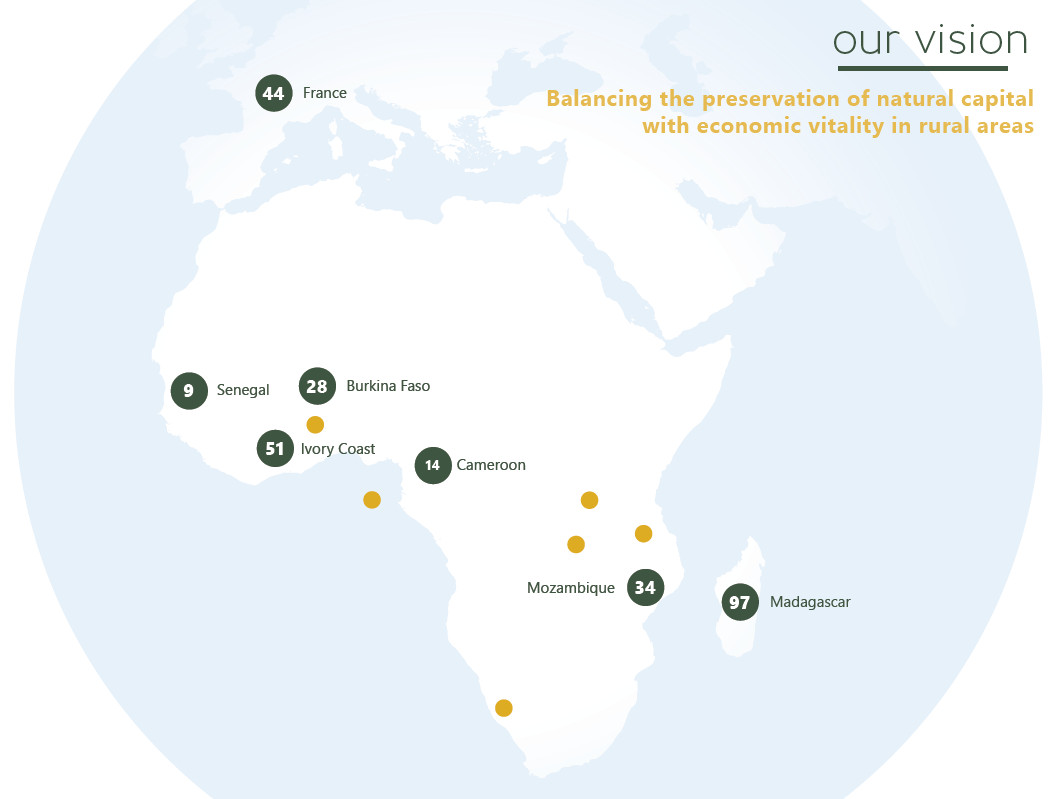
259 employees
11 directors
6 country offices
6 « biodiversity and development » landscapes :
- PONASI Complex (Burkina Faso)
- Comoé and Mabi Yaya (Ivory Coast)
- Gilé and Namuli (Mozambique)
- Anosy Region (Madagascar)
And far beyond that, our teams were also active in 2025 in Uganda, São Tomé, Namibia, Tanzania, Burundi, Peru and elsewhere.
True to its mission, Nitidæ maintains an integrated approach combining environmental conservation, economic development and the reduction of inequalities in rural areas. The wealth of expertise brought together within the association – botanists, agronomists, foresters, economists, ecologists, geographers and sociologists – fosters a diverse range of perspectives on these issues and promotes genuine dialogue between disciplines. This complementarity is one of Nitidæ’s key strengths and contributes to the effectiveness of its work.
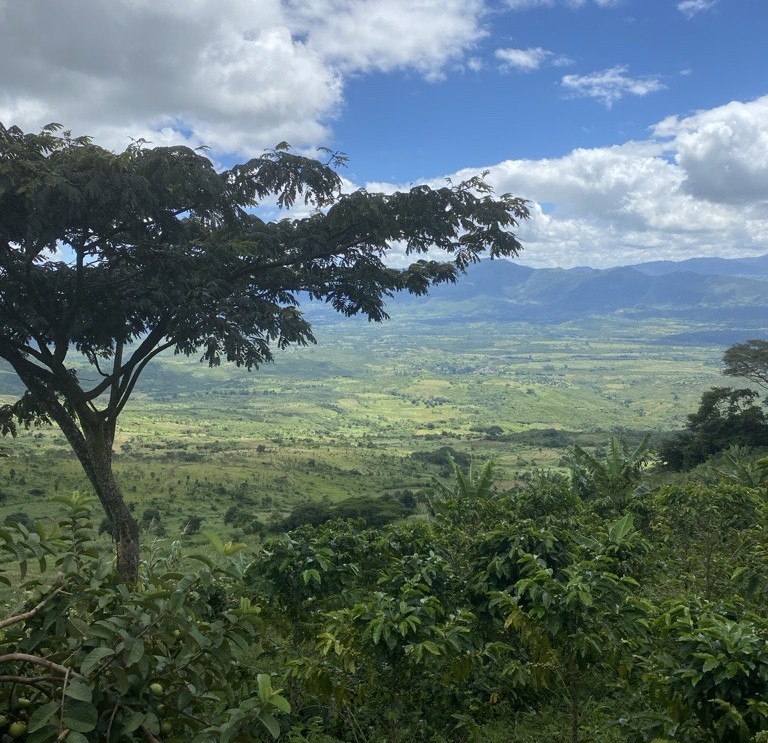
2026 looks set to be just as dynamic. It begins with the launch of the SATAF (Strengthening Agroecological Transition & Agroforestry in Africa) programme, which aims to support the transition to sustainable agricultural and agroforestry systems within the cocoa, coffee and cashew nut value chains. Rolled out in Côte d’Ivoire, Uganda, Tanzania and Mozambique, this programme illustrates the geographical expansion of the organisation’s activities. It will also pave the way for the roll-out of new projects in these countries and help to strengthen Nitidæ’s local presence.
Furthermore, this dynamic is already yielding tangible results. In Madagascar, the provisional protection of the Beampingaratsy forest massif – which Nitidæ has is promoting – represents a major step forward for biodiversity conservation and the adaptation of local areas to climate change. The result of a long-term effort carried out in collaboration with the Malagasy authorities and their partners, this recognition illustrates Nitidæ’s ambition: to demonstrate that it is possible to reconcile the protection of ecosystems, the development of rural areas and the sustainable improvement of people’s living conditions.
Thank you to all our teams, funding partners, field partners, scientific partners and local communities for their day-to-day commitment.