
SELEGAL - Support for the salt industry in the Sine Saloum region
Partners
Main goals
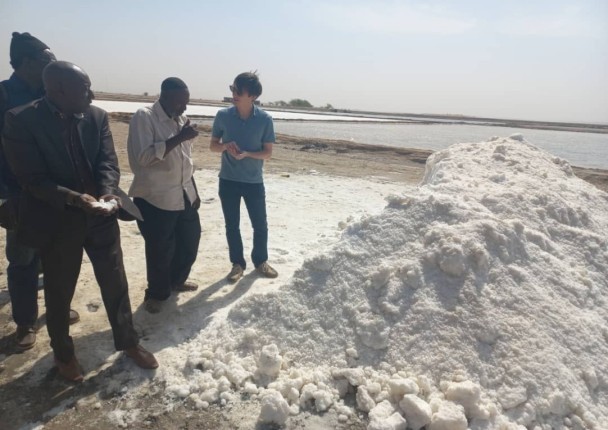
As part of the Belgian cooperation programme Naatal Sine Saloum, this study aims to develop the salt sector in the Sine Saloum region, particularly in the regions of Fatick, Kaolack and Kaffrine, in order to help improve the resilience and sustainability of food systems and to enhance access to healthy, high-quality food for everyone in Senegal
Specific objectives
SO1. Improving the performance and sustainability of the activities of stakeholders in the salt value chain
SO2. Strengthening the enabling environment to support the development of a more inclusive salt sector
SO3. Establishing a platform for monitoring and coordinating activities in support of the salt sector
Results
General
R1. An action plan for the development of the salt value chain, taking into account the mission’s three specific objectives, is designed and implemented
R2. A system for monitoring and evaluating the project’s indicators is put in place
Private sector stakeholders
R3. The targeted stakeholders (producers, economic interest groups, cooperatives) are trained and coached on good sustainable practices in production and processing within the salt value chain
R4. The targeted stakeholders (producers, economic interest groups, cooperatives) are trained and supported on issues of business management and governance
R5. A participatory system for monitoring and improving product quality is established
R6. A development and dissemination strategy is proposed for i) food innovations and ii) innovations in coordination and access to new market segments within the salt sector
R7. Working conditions, particularly for women, are improved and women’s empowerment in the salt sector is strengthened
R8. Stakeholders are supported on issues related to marketing, particularly on setting fair prices for all, bundled sales for cooperatives, contractual arrangements and thier compliance
Institutional stakeholders
R9. The capacities of the chambers of trades are strengthened through training and the use of modern tools and methodologies (digital technologies for management and networking among stakeholders)
R10. Platforms for collecting, analysing and sharing information on the salt sector are established
Sectoral support
R11. A plan to structure and organise stakeholders in the salt sector in the central region is proposed
R12. The institutional framework of the salt sector is strengthened and stabilised
R13. The association of salt producers in the central zone is strengthened through the study’s activities, with a view to preparing for the establishment of the salt inter-professional organisation
R14. A framework aimed at strengthening exchanges between stakeholders in the salt value chain at various levels (local, national and sub-regional) is proposed
Activities
Component 1. Support for private sector stakeholders
A1. Preliminary meetings with stakeholders and needs assessment
A2. Development of the action plan
A3. Training and coaching on production and processing
A4. Training and coaching on governance and business management
A5. Development of a strategy for the development and dissemination of food innovations and innovations in coordination and access to new market segments within the salt sector
A6. Establishment of a participatory system for monitoring and improving the product quality of artisanal salt producers, specifying the actions to be taken for bulk and retail sales of products
A7. Support for marketing and sales
A8. Improvement of working conditions for stakeholders in the salt sector through the application of decent work principles
A9. Improvement of working conditions for women and strengthening of their empowerment in the salt sector
Component 2. Institutional and sectoral support
A10. Capacity building for chambers of trade
A11. Strengthening and stabilising the institutional framework of the salt sector
A12. Strengthening the association of salt producers in the central region
A13. Strengthening exchanges between stakeholders in the salt sector at local, national and sub-regional levels
A14. Establishment of platforms for the collection, analysis and sharing of information on the salt sector in the three regions
Component 3. Coordination and Monitoring & Evaluation
A15. Kick-off meetings and methodological scoping
A16. Recruitment of the field team and training
A17. Establishment of the monitoring and evaluation system
A18. Implementation of the monitoring and evaluation system
A19. Knowledge transfer
Related people
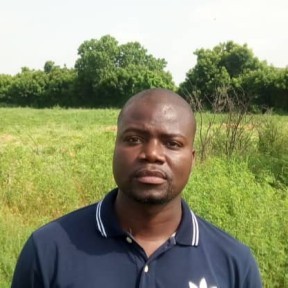
Cheikh Ousmane Loum
Graduated from a Master 2 in Territorial Planning - Decentralization and Local Development from the Faculty of Geography of the University Cheikh Anta Diop in Dakar. He also holds an engineering degree (Master 1) in community development and training from the Higher School of Applied Economics in Dakar. He is an expert in agricultural market analysis and in training and supporting producer organizations
See more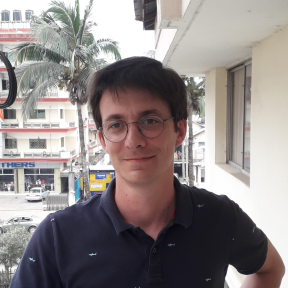
François Griffon
Holder of a Master's degree in "Sustainable Farming and Agri-food Systems in the South", specialised in "Markets, Organization, Quality and Services" from Montpellier SupAgro - Institut des Régions Chaudes (IRC), he brings his expertise in sector and value chain analysis, market studies, quality management and farmers' organisations services and support
See more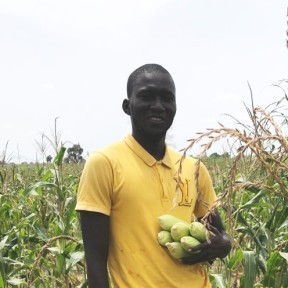
Ibrahima Cissé
Holder of a Master 2 in Community Development from the Higher Institute of Local Development, as well as a License in Development Project Management, he has acquired solid academic training in the field. With experience supporting women in his community in the creation of income-generating activities then within the framework of the Agropole Center Professional Organizations Professionalization Project (PROPAC) as an endogenous facilitator, where he actively contributed to community development, particularly in agriculture. He brings his experience in promoting local and community development and improving the living conditions of communities, within the framework of sustainable and beneficial projects